New housing consultation deadline is near!

The deadline for making submissions to the latest housing consultation is Wednesday 16th December. 

BaSRAG has now submitted its views. In summary, they are that:

•            If additional housing is required, we support a hybrid solution of options A (intensify housing within urban extension sites) & C (additional growth points)

•            These new growth points at Whitminster and Moreton Valence / Hardwicke are far more sustainable in terms of employment potential and infrastructure than the one proposed at Sharpness

•            We do not support the approach of identifying a reserve site or sites in case allocated sites do not come forward. Instead the council should be reviewing the whole Local Plan in the light of the significant potential new sites and evidence that has belatedly emerged since the original proposals.

If you wish to read our full submission, it can be seen by clicking the button below.

You are obviously free to ‘borrow’ as much or as little of our material as you wish.

If you are concerned about the huge development planned for Berkeley and Sharpness, please contribute to the consultation, either by completing the questionnaire or in writing. All the options for submissions are:

Email local.plan@stroud.gov.uk

Write to Local Plan Review
The Planning Strategy Team
Stroud District Council
Ebley Mill
GL5 4UB

Complete questionnaire at https://www.smartsurvey.co.uk/s/GBCI7A/

BaSRAG thoughts on the Council’s additional housing sites consultation

Stroud District Council is conducting a new consultation about the Local Plan. In summary, they are asking the public their views on –

  • What approach they should take if they are required by government to build even more houses than currently planned (or if some sites already earmarked get removed from the process at a later stage)
  • More specific sites that have come forward since the last consultation

The full consultation paper together with background papers and Powerpoint presentations can be seen at the council’s website – https://www.stroud.gov.uk/localplanreview 

We of course hope you will take the time to read the consultation document and let the council know what you think about it. You can write, email or complete their online questionnaire.

The questionnaire asks you first what you think about four possible approaches they could take when deciding how and where to provide additional housing. Those options are, broadly –

  • A. To build more intensively on sites already identified close to existing larger urban centres
  • B. Look for more sites at the smaller towns and larger villages
  • C. A new growth point for a large settlement – similar to the one proposed for ‘Sharpness Vale’ but more sustainably positioned. Two potential locations have been identified along the A38 corridor and close to the motorway.
  • D. Wider dispersal amongst smaller villages, as well as those identified under option B.

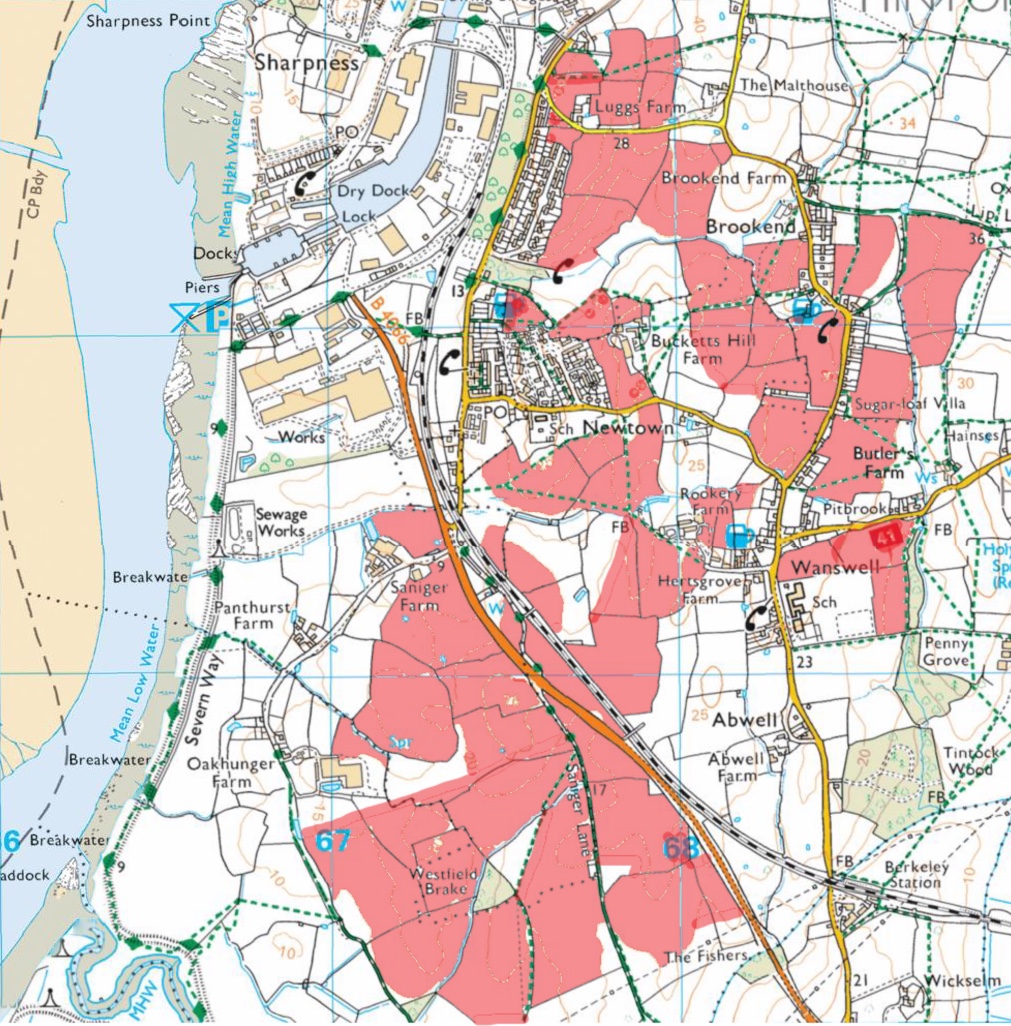
We strongly believe that a hybrid approach combining option A and Option C is the best one as it is entirely consistent with our argument that any development should be sustainable in terms of employment and transport links. Increasing densities at sites adjacent to existing urban areas and the new potential growth points further up the A38 and closer to Gloucester and Cheltenham tick those boxes far more than 5,000 houses built on the banks of the Severn, remote from any significant employment opportunities or major transport links.

The online questionnaire is a bit less complicated than those produced at previous stages of this process. It asks you first for your opinions on the four possible options as outlined above. It then goes on to ask about specific sites that have come forward since the last iteration of the Plan. These include two smallish sites in Berkeley.

We shall be strongly supporting the intensification of sites close to existing urban centres and new growth point developments at Whitminster and Moreton Valence.

The council asks that we do not repeat arguments that we have made at previous stages of this process; however, a positive support of different, better positioned, more sustainable growth points succinctly emphasises how unsuitable Sharpness is!

Whether or not the current government plans to increase housing numbers go ahead, these options are a much better alternative to the proposal to build houses in such huge numbers at ‘Sharpness Vale’.

The final part of the questionnaire asks for your comments on the Sustainability Appraisal which is a 127 page document commissioned to analyse the suitability (or otherwise) of the approaches and sites discussed in the current consultation. If you read the entire document – congratulations! Whether you choose to comment on it in the questionnaire is entirely optional.

The consultation runs until 16th December.

Finally, and as a bit of an aside, those eagle-eyed readers of the consultation document may notice that the basic maps shown alongside the main strategy options have got the rail link from Sharpness drawn in. Obviously, this is intended to make Sharpness appear more sustainable, but to rely on a link which won’t exist for at least 20 years if at all is, in our view, quite outrageous!

If you have any queries or need any help, please get in touch at contact@basrag.com  

BaSRAG Response to the Government’s “Planning for the Future” White Paper

The consultation on the ‘Planning for the Future’ White Paper ends on Thursday 29 October.

Shown below is our response to the consultation. Please feel free to ‘borrow’ parts of our response if you agree with our position and wish to add your voice to the views expressed by the public.

We believe the proposals in the White Paper are fundamentally flawed for the following reasons:

– It is assumed that delays in housebuilding are due to faults in the planning system. It is the responsibility of planners to make housing land available, but it is the housebuilding industry that is responsible for building the houses. There are planning permissions for over one million houses which have not been built. These proposals do nothing to address that developers will wait until the most advantageous time for them to build.

– The new laws will make the provision of much needed low cost and affordable housing even more limited.

– The public will have much less opportunity to meaningfully scrutinise future plans. It provides a broad brush approach to planning, effectively reducing the opportunity for local communities to shape their own area. You refer to the TCPA, RTPI and the GBC as providing evidence, yet all these bodies are critical of significant elements of the White Paper, specifically that it is not likely to achieve its specific aims.

– In addition to those mentioned above, diverse and key bodies such as RIBA, CPRE, Friends of the Earth and the Local Government Association have significant and legitimate concerns about these proposals and the views of these experts must be taken into account.

– The proposals largely ignore the importance of countryside in addressing the climate emergency, biodiversity, wildlife and other government commitments, for example to increase tree coverage.

– The proposals for the change to the new Standard Method should have been included within this White Paper and not the subject of a separate and shorter consultation.

– The new Standard Method would lead to a greater volume of housebuilding in the South, perpetuating the North-South divide.

– Additionally, In our area (Stroud District), the fact that the AONB would be (correctly) protected, would put impossible pressure on the rest of the District if the new algorithm is instituted.

– The current proposals will pressure local authorities to meet a significantly enhanced housing requirement forced on them by the Standard Method algorithm without taking into account what we need and what makes our area special. The assessment of housing need and capacity should consider local landscapes, environmental designations, conservation, flood plains, the LNP tree strategy, demographic factors and varying components of household projections which can impact the algorithm affordability calculations, infrastructure and services.

– It is highly likely that to meet the proposed algorithm’s housing requirement, properties would need to be built on flood plains. This is unacceptable, unnecessary and immoral.

– The intention of the new affordability adjustment is to identify undersupply where high house prices signify an imbalance between supply and demand. It is also to put more pressure on authorities which have seen worsening affordability over a 10 year timeframe. There is no evidence to suggest the proposals will have the desired impact on property affordability or the supply of homes for those in a housing crisis.

– Whilst there is probably an overcomplicated series of assessments currently required, we have significant concerns about replacing the existing tests of soundness with a Sustainable Development test, and abolishing the Duty to Cooperate.

– We agree that only those who are truly committed engage with the consultation process, but these proposals will not make it easier to do so. In some ways, opportunities will become much more limited.

– It is a stated aim that the proposals will favour the small builder and SMEs, but our reading suggests the opposite, and will be beneficial for the big players.

– The overall thrust of the proposals places any meaningful opportunity that the public has to influence planning decisions at the Local Plan stage and not when a specific development is being considered. Yet the public will only have 6 weeks in which to consider a draft Local Plan, at the same time as which it has been submitted to the Secretary of State for Examination.

– We agree that the current system for developer contributions to affordable housing and infrastructure is not adequate, but no evidence as to how these proposals will improve this situation.

In conclusion, we find that the proposals lack specificity, and details are replaced by assertion and rhetoric. However, the laudable aims stated in the PM’s introduction – encouraging sustainable and beautiful development, making it harder for developers to dodge their obligations, and giving the public a greater say over what gets built in their community – are not met by these proposals.

Our local Conservative MP, Siobhan Baillie, has written to the Minister with her concerns. 

The current planning system is far from perfect, but this affront to local democracy is not the answer. No attempt is made in these proposals to force developers to proceed with building once permission has been granted, which is probably the single most significant cause of housebuilding targets not being met.

Local Plan Delayed as Council Consults on more Housing Sites


The council has confirmed that the timetable for the Local Plan has been delayed. It now intends to present a final version to the full Council in February 2021 for approval for consultation. Following this there will be a six week public consultation. It would then be submitted to government for examination at Public Inquiry in May 2021.

We have no idea how, if at all, our previously expressed views will be reflected in the final Draft Local Plan. The planners do not intend to publish a report on the last consultation in advance of their final draft.

Meanwhile, the government has proposed a change to the way the housing requirement for each local authority should be calculated. Stroud believes that if approved, they will be bound to increase their building requirement from 638 to 786 homes per annum.

As a result, the council has launched a new consultation in which it asks the public to consider some additional sites which could be included in the final Draft Local Plan alongside all those previously identified. This is in part to meet any potential shortfall in housing numbers due to the new calculation, and in case any of the existing proposed sites are removed or reduced by the council.

They also ask the public for their views on what strategy they should follow in finding additional land on which to build.

This new consultation runs until 16th December and details can be seen on the council’s website here – https://www.stroud.gov.uk/localplanreview

Please take time to look at what is being proposed and consider whether this has implications for Berkeley-Sharpness either in addition to the proposals put forward in the Draft Local Plan or as alternatives to them. Whilst the Council is encouraging responses via their online questionnaire it will also accept emailed and written responses so please do not be put off from responding by their focus on online responses!

You can view the thoughts of BaSRAG on the Council’s new consultation by clicking here

New Planning Rules – a further threat to our green spaces and to local democracy

The Government is rushing through proposals to change the planning process. They say it will simplify the process, freeing up the ability to get houses built quicker. In fact, many experts believe that:

  • the public will have much less opportunity to scrutinise any plans
  • it does not address in any way the fact that there is existing planning permission for over one million houses to be built but which are not being delivered, as developers are waiting for more profitable times in which to build
  • the new laws will make the provision of affordable housing even more limited.

In summary, the key points are:

  • Local plans would be simplified and focus on identifying three categories of land – 
    • ‘growth areas’ that are ‘suitable for substantial development’
      • outline approval would be automatically granted for forms and types of development specified in the plan
    • ‘renewal areas’ that are ‘suitable for development’
      • Development in renewal areas would ‘cover existing built areas where smaller scale development is appropriate’ and could include the ‘gentle densification’ of residential areas, development in town centres, and small sites in and around villages.
    • ‘protected areas’. 
      • Protected areas, including green belt, conservation areas and Areas of Outstanding Natural Beauty (AONBs), would still be subject to ‘more stringent’ development.

If the development at Sharpness were to be considered under these proposals, it is highly likely it would be classified as a ‘growth area’ and therefore there would be a ‘statutory presumption in favour of development’.  As we are finding out, it is hard enough now making our legitimate concerns taken into account – under these changes, it would be almost impossible.

Full details are shown here – https://www.gov.uk/government/consultations/planning-for-the-future

What you can do

If, like us, you are concerned by this affront to local democracy, you could do one or more of the following:

It is not just us that consider these plans an affront to local democracy. We are not experts, just local people wanting to have a say about what happens in our area. See below for what some experts have to say.

What others have to say

  • Royal Institute of British Architects

‘these shameful proposals do almost nothing to guarantee the delivery of affordable, well-designed and sustainable homes’ 

  • The Local Government Association

‘It is vital that (new homes) are delivered through a locally-led planning system with public participation at its heart which gives communities the power to ensure new developments are of a high standard, built in the right places, and include affordable homes. We also need to ensure that new homes are supported by new funding for community infrastructure such as schools, playgrounds and roads.

Nine in 10 applications are approved by councils with more than a million homes given planning permission over the last decade yet to be built.

Any reforms (must) protect the rights of communities to shape the areas they live in.’

  • The Town and Country Planning Association

As we confront the scale of the health, climate and housing crises, the TCPA is concerned that the Planning White Paper fails to lay the foundations for a democratic and effective planning system.

We agree with the government that planning is important and that the system is central to tackling important national issues including the need for genuinely affordable homes, combating climate change, improving biodiversity and levelling up the nation. We are also clear that poor quality outcomes from the planning system undermine people’s health, safety, wellbeing and life chances. 

While we recognise the government wants to move at speed, it is essential that we get these reforms right.

We are concerned that while there is positive language about design and empowerment in the White Paper, there is a disconnect between that and the specific proposals.

  • The Ramblers Association

‘The Ramblers has joined other environment and access charities in a warning that proposed reforms to speed up the planning process published by the government could put wildlife, heritage and green open spaces at risk, unless critical environmental rules are maintained and strengthened. 

The planning system is not the main cause of development delays or affordable housing shortfalls – 90% of applications are approved by local planning authorities, but developers often delay building.’

  • CEO of Wildlife and Countryside Link

‘The scale of reform proposed by the Government could allow unrestrained development across great swathes of our landscape, unless it is properly balanced by site-specific, democratic and transparent protection for nature across the country.’ 

  • Friends of the Earth

‘These planning reforms are bad news for our communities, climate, and local democracy. A robust planning system is essential to deal with the housing, nature and climate crises we face, so we can emerge from the pandemic in a green and fairer way. Weakening the system will only benefit developers because it will mean building where developers can maximise their profit, rather than what communities need. These proposals are a developers charter that bypasses the democratic wishes of communities and threatens a wave of poorly-built, badly-sited developments.’ 

  • Royal Society for the  Protection of Birds

‘Nature is in free-fall and the planning system has a crucial role to play in reversing that. In a recent study, 81% of people in England agreed the Coronavirus (COVID-19) outbreak has shown the importance of protecting and restoring nature. It is therefore vital any reforms show how the planning system will protect nature and ensure its recovery.’ 

.